
AKIPRESS.COM - 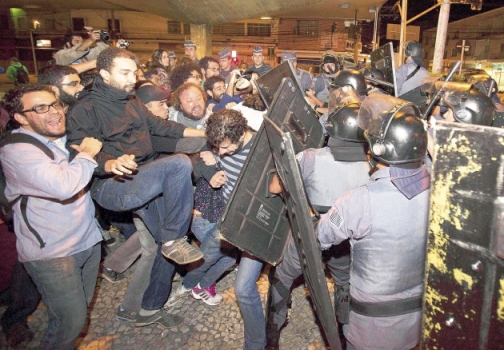 Brazilian police and striking subway workers clashed in a central commuter station yesterday while union leaders threatened to maintain the work stoppage through the World Cup's opening match in Sao Paulo this week.
Authorities are deeply worried about the strike because the subway is the main means of transportation for fans who will attend the tournament's initial game between Brazil and Croatia on Thursday. The stadium is about 20 kilometres (12 miles) east of central Sao Paulo, where most tourists stay, the AP said.
There were hopes the work stoppage might be resolved sooner than that as union officials met for the first time in days with Government authorities in talks that continued into last night. Last year, a transit fare increase was reversed after violent protests broke out in the city, which is Brazil's biggest.
Earlier yesterday, riot police fired tear gas to force about 100 striking workers out of the station on the fifth day of the strike that has thrown Sao Paulo's normally congested traffic into chaos.
Altino Prazeres, president of the union leading the strike, said almost all of the 8,000 subway employees had walked out in the past few days. He marched along with workers on a street in central Sao Paulo and said they were not interested in disrupting the World Cup.
Prazeres said workers were willing to negotiate a lower raise if the State-run subway company offered more benefits, but managers have refused to agree. A labour court has ruled that the salary rise should be 8.7 per cent.
A spokeswoman for the subway company declined to answer questions.
A Sao Paulo labour court over the weekend fined the union US$175,000 for the first four days of the strike and said it would add US$220,000 for each additional day the work stoppage continued.
The subway strike is the latest unrest to hit Brazil in the run-up to the World Cup. Teachers remain on strike in Rio de Janeiro and routinely block streets with rallies. Police in several cities have gone on strike, but are back at work now.
Demonstrations have repeatedly erupted in Brazil's metropolitan areas in recent months, with even a small number of protesters blocking main roadways and severely disrupting traffic.