
AKIPRESS.COM - 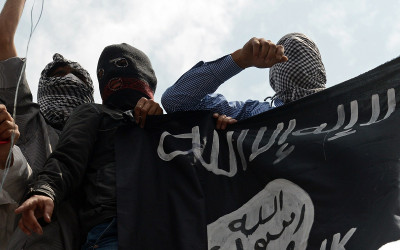 As the U.S. mission in Iraq expands, so do its efforts to arm and train the country's security forces to combat the Islamic State group, with large-scale operations continuing to recapture territory from the Sunni terrorists, TribLive News reports.
Hundreds of American advisers are working at the Camp Taji military base just north of Baghdad to train Iraqi forces on issues such as weaponry and better coordination and integration of ground action with coalition airstrikes.
The goal, military officials say, is to teach the divisions of the Iraqi military how to harmonize the operations of its fighting units.
In November, President Obama authorized the deployment of up to 1,500 more American troops to bolster Iraqi forces, which could more than double the total of U.S. forces to 3,100. The boost in advisers and trainers complements the air campaign launched in August.
The Iraqi military has struggled to recover from its collapse in June, when the Islamic State captured the country's second-largest city, Mosul, and swept over much of northern Iraq. During the advance, commanders disappeared. Pleas for more ammunition went unanswered. In some cases, soldiers stripped off their uniforms and ran.
Twelve American advisory teams had been operating in Iraq since August, stationed in joint operations centers in Baghdad and Irbil, as well as in some of the outer provinces, including volatile Anbar province, which has been under partial control of the terrorist group since early 2014.
The Iraqi military – backed by at least 20,000 Shiite militiamen – is fighting to regain control of Saddam Hussein's hometown of Tikrit, one of several predominantly Sunni towns to fall to the terrorists last year. It's one of the first major operations in which the U.S.-led coalition is not taking part, with officials saying they were not asked to participate. Iranian advisers have played a prominent role on the front lines of Iraq's Salahuddin province.
If Iraqi forces are unable to push ISIS back and recover lost territory, Obama would be faced with a choice of accepting failure in Iraq or committing combat troops – something both U.S. and Iraqi officials have spoken firmly against.
Many of the young men fighting alongside the Shiite militias, known locally as Popular Mobilization Units, joined the battle last year when Iraq's most revered Shiite cleric, Grand Ayatollah Ali al-Sistani, called on Iraqis to defend their nation.
While the United States has been working to train Iraqi military brigades, it has not worked with the militias, since doing so would bring them uncomfortably close to Iran, which offers significant assistance to the various militias.