
AKIPRESS.COM - 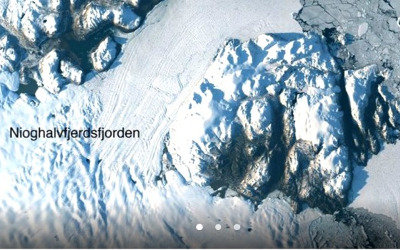 As the world prepares for the most important global climate summit yet - in Paris this month - news from Greenland could add urgency to the negotiations.
A glacier in north-east Greenland with enough ice to raise world ocean levels by half a metre has begun to slide more quickly towards the sea, extending ice losses to all corners of the vast remote island, a US study shows, Sydney Morning Herald reports.
Because of warmer water temperatures, the end of the Zachariae Isstrom glacier floated free from a ridge of bedrock below sea level on which it had rested until 2012, the study, which was reported in the journal Science on Thursday, said.
Without that natural brake, the glacier in the cold north was now sliding more quickly and more icebergs were snapping off, adding a net five billion tonnes of ice a year to the oceans, according to the study based on satellite and aerial surveys.
"Similar changes - even larger - are under way in the south," Jeremie Mouginot of the University of California-Irvine and his colleagues said.
Greenland contains enough ice to raise world sea levels by about six metres if it ever all melted in a slow-motion collapse that could take thousands of years. Its ice losses, along with thawing ice from the Alps to Antarctica, have raised sea levels by about 20 centimetres since 1900. That aggravates storm surges for cities from New York to Shanghai and threatens low-lying tropical island nations.
A nearby north Greenland glacier, Nioghalvfjerdsfjorden - often called "79" for ease of pronunciation - was also melting quickly, the study said.
But its slide was restricted by an uphill section of seabed under its icy base. The two glaciers together contain a potential 1.1 metres of sea level rise. "The changes are staggering and are now affecting the four corners of Greenland," Eric Rignot, a co-author at UCI, said.
Almost 200 nations will meet in Paris for a summit starting on November 30 to try to limit climate change.