
AKIPRESS.COM - 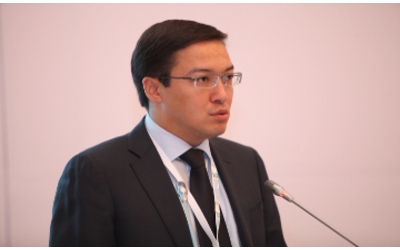 The Kazakh tenge has regained parity with the rouble of its major trading partner Russia, but could weaken further if the world price of oil falls to $40 per barrel, Kazakh central bank head Daniyar Akishev said on Wednesday, reports Reuters.
The currency has fallen sharply in value since it was allowed to float freely in August in response to a plunge in oil prices and the rouble's sharp depreciation, which had led to a surge in cheap goods from Russia that hurt local producers.
"At this moment the tenge has reached parity with the Russian rouble," Akishev told a government meeting. "We have now reached the point at which we stood in early 2014 before the fall in oil prices and the devaluation of the Russian rouble."
Central Asia's largest economy and the second-largest post-Soviet oil producer after Russia, Kazakhstan had previously devalued the currency in February 2014.
From January 2014 through October this year, the tenge weakened by about 37 percent. The official rate of the tenge eased to 307.68 per dollar on Wednesday. Historically, the tenge had traded at 4.5-5 per rouble.
Further weakening of the tenge may be insignificant, because most of the negative scenarios have already happened, Akishev said, adding: "Should the oil price fall to $40 per barrel, most probably there will be (downward) correction of the rate."
Brent crude traded at $43.99 per barrel at 0713 GMT. Presidential aide Akishev replaced Kairat Kelimbetov as chairman of the central bank this month.
Under Kelimbetov, the central bank abandoned its pegged exchange rate policy on Aug. 20, but resumed heavy interventions from Sept. 16 when the tenge touched 300 per dollar.
With Akishev, the central bank decided to stop burning through its reserves by propping up the tenge, which it said had had cost the bank and the state oil fund over $5 billion, and switched to a hands-off approach.
"Our actions aim now to reduce our direct intervention into the rate mechanism, we will not interfere with the fundamental trend," Akishev said.
Annual inflation will exceed the official target of 6-8 percent this year, and the task now is to bring it back into this range in 2016, he said.
Consumer prices grew by 9.4 percent in the first 10 months of this year, he told a government meeting. Inflation accelerated to 7.4 percent last year from 4.8 percent in 2013.