
AKIPRESS.COM - 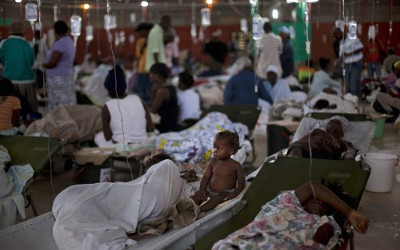 A dozen people reclined on cots inside the clinic in the Haitian capital, a few so sick they were receiving intravenous infusions to rehydrate their bodies and spare them an agonizing death.
The worst off one recent morning was a thin and spectral man, weak from the vomiting and diarrhea caused by cholera. But all were expected to survive. The disease spread by contaminated water is easily treatable but can lead to death within hours if unattended, reports AP.
"However I got it, I really hope I never get this sick again," another patient, Estin Josue, said as he recovered inside an immaculately clean and orderly treatment center in downtown Port-au-Prince run by Gheskio Centers, a Haitian medical organization.
Cholera, which arrived in Haiti in October 2010, has sickened more than 770,000 people, or about 7 percent of the population, and killed more than 9,200. So far this year, it has sickened more than 6,000 and is killing an average of 37 people a month.
World Health Organization spokesman Gregory Hartl said cholera is now considered "endemic" in Haiti, meaning it's an illness that occurs regularly. Others have noted the cholera bacterium now appears to be firmly established in Haiti's rivers, estuaries and even coastal waters.
Dr. Joseph Donald Francois, who coordinates the health ministry's efforts to combat the illness, still believes Haiti, with international help, can eliminate cholera by 2022. But he acknowledged the effort is badly underfinanced.
Only $307 million, or less than 14 percent, has been funded of a $2.2 billion plan announced in 2013 to eradicate cholera from the island shared by Haiti and the Dominican Republic over a decade, according to a November report from the U.N.
Cholera showed up 10 months after a devastating earthquake in the south of Haiti, deepening the country's misery at a time when it was ill-equipped to cope with a second crisis.While the number of cholera cases has been significantly reduced from its first wave and the mortality rate has been slashed to lower than 1 percent from a high of 9 percent in December 2010, the fact that cholera is still killing Haitians more than five years on is galling to public health experts.