
AKIPRESS.COM - In 1924, Mongolia became a victim of occupation followed by a revolution from Soviet communists. By 1939, most of their 1,000 Buddhist monasteries perished along with most of Mongolia’s Buddha statues, only one monastery was left standing. More than 30,000 Buddhist monks lost their lives in the struggle. During this time most all of the Mongolian people were moved away from Tibetan Buddhism, according to Patheos.
After many years of occupation, 200 Mongolian people staged a peaceful protest in 1989 that eventually sparked into a nationwide cultural revolution. By 1990, the occupying forces retreated and Mongolia once again re-gained their spiritual freedoms. Aiming to re-build and re-connect fully with their ancient culture of Tibetan Buddhism, the Mongolian people have largely turned to Dalai Lama for guidance.
Both the Dalai Lama and Maitreya Buddha have special connections with the people of Mongolia. In 1577, the country leader Altan Khan, with the goal of uniting the Mongolian people, invited the head of the Gelug tradition Sonam Gyatso to visit. While living in a famous Mongolian Maitreya Temple, Sonam Gyatso successfully spread the teachings of Buddhism throughout Mongolia. Altan Khan bestowed the name Dalai Lama upon Sonam Gyatso automatically making him the 3rd Dalai Lama. The 4th Dalai Lama was born inside of Mongolia as the great-grandson of Altan Khan and ever since the Dalai Lamas have played a key role in the Buddhist culture of Mongolia.
Maitreya’s connection with the Dalai Lama line and the Mongolian people is depicted in famous Buddhist Mongol art, where it showcases the spreading of the Buddhist tradition outside of Tibet. Maitreya statues and regular rituals have been commonplace in Mongolia’s daily life and up until the cultural revolution of the 20th century there were many Maitreya statues for the people to visit.

Dalai Lama and Mishigish Bataa, former Tibetan Buddhist monk
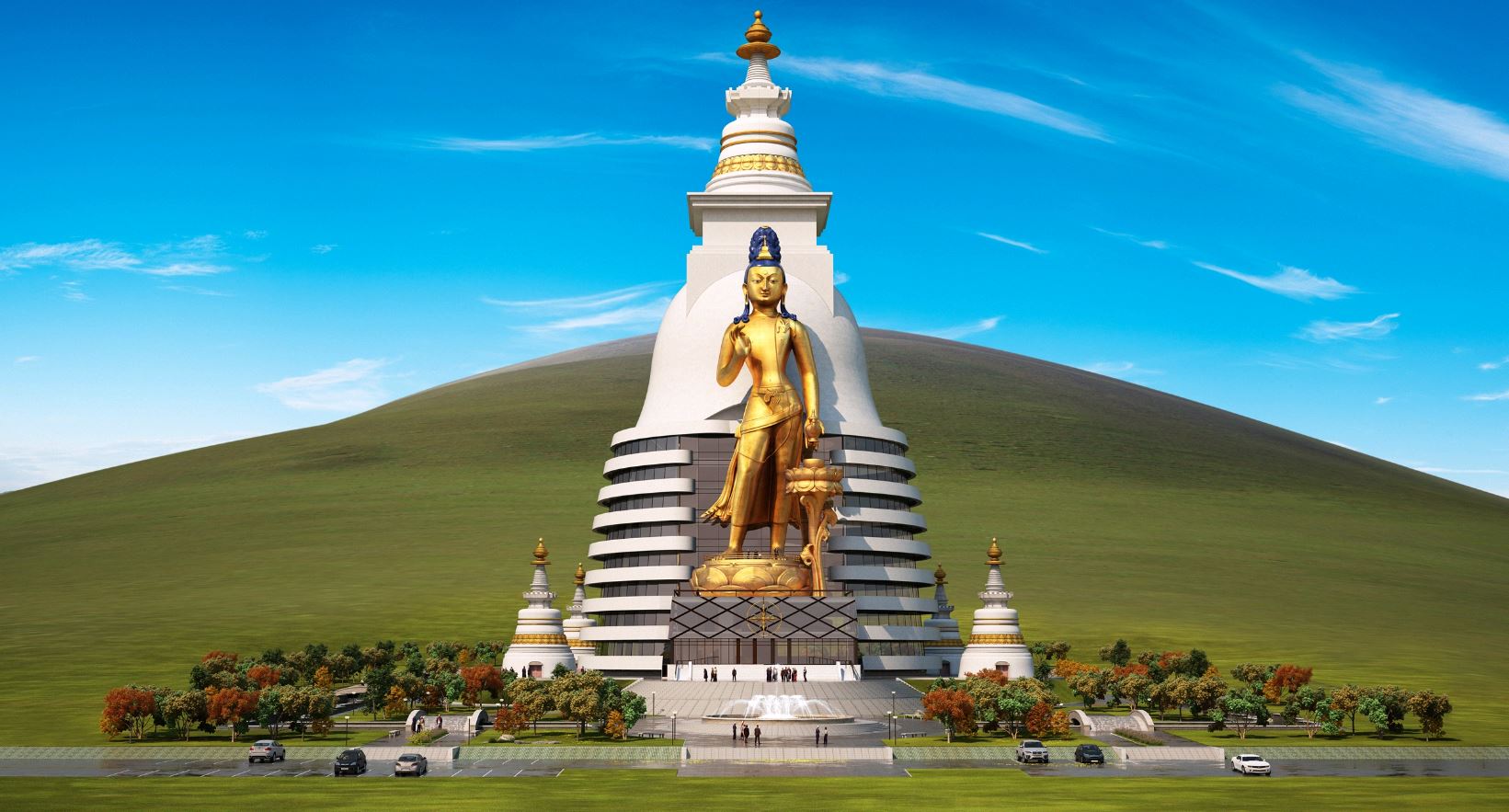
The Grand Maitreya Project is under the spiritual guidance of Dalai Lama. The Project aims to help further Mongolia’s cultural revival by building the world’s largest beacon of Buddhism. A 177-foot-tall statue of the standing Maitreya Bodhisattva is planned to be erected. Maitreya is the Buddha, or Bodhisattva of Loving – Kindness. Connected to the statue will be a Kadampa stupa designed in the likeness of Lama Atisha’s own personal stupa. The stupa will house several interior teaching and meditation levels along with holy relics and other artifacts of the historical Buddha.
Building large statues of Maitreya was an ancient spiritual tradition for many of the high Mongolian and Tibetan Buddhist lamas of the past. Many of the lamas teach that the larger and more beautiful the statue of love is, the more people will learn about it, come into contact and benefit from this. The historical Buddha explained that when one sees an image of love and peace it makes one think of peace.

The statue site is located in a place Mongolian people affectionately call Heart Hill, just outside of the Mongolian capital city of Ulaanbaatar. The statue site will be home to a new holy place for the Dalai Lama and will serve as an educational, spiritual and cultural center for the world. The statue site will also feature non-sectarian & international Buddhist centers representing many different lineages and traditions from around the world.
The Project is a non-profit, non-government organization with offices in Mongolia and Santa Fe, New Mexico. The Project is being conducted under a spiritual advisory board led by the Dalai Lama, leader of Mongolian Buddhism Khamba Lama Gyabje Choijamts Demberel, Lama Jhado Rinpoche and Venerable Thupten Ngodup State Oracle of Tibet.