
AKIPRESS.COM - 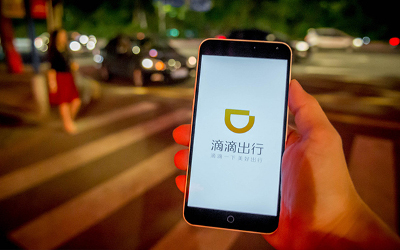 Apple Inc. is betting $1 billion on China’s homegrown competitor to Uber Technologies Inc., marking the technology giant’s largest investment in a critical market at a time when its global fortunes are flagging, The Wall Street Journal reports.
The investment in Didi Chuxing Technology Co., announced late Thursday in California, came on the day that Apple briefly ceded its spot as the world’s most valuable company to Google parent Alphabet Inc., a lingering effect of a quarterly earnings announcement that spooked investors about Apple’s future. Among the worrying signs from its earnings report last month were indications of slowing sales in China where Apple had been posting booming sales.
Didi Chuxing – which investors are valuing at over $25 billion, making it one of China’s most valuable startups – is locked in a fierce battle with UberChina to attract riders and investors in China’s ride-share market.
Apple declined to elaborate on the motivation for the deal. However, the company has been working on building an autonomous electric vehicle with a team of more than 1,000 employees. Other ride-sharing services have shown an interest in autonomous vehicles. Uber has a large team of employees working on autonomous vehicle technology, while General Motors and Lyft are planning to start testing a fleet of self-driving taxis within a year.
The investment in Didi is an unusual one for Apple, which tends to prefer to buy small startups outright and absorb their technology into its product pipeline. This is the largest investment for Apple since it acquired headphones and streaming music service Beats Electronics for $3 billion in 2014, a deal that helped the company launch its Apple Music service. It is also unusual for Apple to participate in a fund-raising round for a startup.
The $1 billion investment barely makes a dent in the company’s cash holdings of $233 billion.
The investment could encourage the adoption of its Apple Pay and other services in China, although the announcement didn’t elaborate on cooperation plans between the two sides.
As its second-largest market for iPhones, China is a key market for Apple. Apple Pay was launched in China in February, and it is vying against China’s leading mobile payment services from Internet giants Alibaba Group Holding Ltd. and Tencent Holdings Ltd.
But Apple has come up against some regulatory challenges in China. Apple’s online book and movie services were suspended by Chinese regulators in the country last month, as the country cracks down on online media, according to people familiar with the discussions. There has so far been no resolution.
Apple sales to Greater China, which the company designates to include Taiwan and Hong Kong, rose 84% in the past fiscal year ended September 2015, as sales of its larger-screen iPhone surged. But as the Chinese economy started to slow, Apple’s sales in the country also took a hit. In the quarter ended March, Apple said sales to the region fell 26% from a year earlier.
For Didi, the deal – which is its single largest investment so far – is a coup that adds Apple to its roster of investors that already include the two largest Internet companies in China: e-commerce giant Alibaba Group Holding and social-and-gaming company Tencent Holdings. The two Chinese Internet giants had supported rival taxi-hailing services that merged to form Didi.
In China’s fast-growing market for ride-sharing, both Didi and UberChina are providing huge subsidies to drivers and riders to sign up for their services.
Didi dominates the country’s taxi-hailing market, and has a larger share than UberChina in the private-car-hailing segment, though the two companies disagree on the exact figures.
As of January, Didi was operating in more than 400 cities in China. UberChina, which operates in more than 45 cities currently in China, aims to expand to 100 cities in China by the end of this year.