
AKIPRESS.COM - 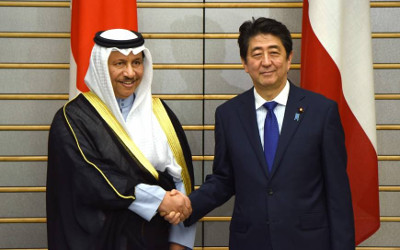 Prime Minister of Japan Shinzo Abe and his Kuwaiti counterpart, Jaber Mubarak Al-Hamad Al-Sabah, agreed Thursday to cooperate in building peace and stability in the terrorism-prone Middle East, according to The Japan Times.
In a meeting with Jaber in Tokyo, Abe said situations in the Middle East such as the fight against terrorism and the refugee crisis in Syria will be on top of the agenda at a Group of Seven summit he will host in late May, according to Deputy Chief Cabinet Secretary Hiroshige Seko.
Referring to anti-terrorism measures to be taken against organizations such as the Islamic State militant group operating in the Middle East, Jaber was quoted by Seko as saying Kuwait “will never tolerate any forms of terrorism.”
The international community must “respond in unison” against terrorist acts, Jaber was quoted as saying.
Abe plans to reflect Jaber’s views in an action plan the G-7 leaders will adopt during the May 26-27 summit in Mie Prefecture, according to Japanese officials.
In addition to the world economy, terrorism and the refugee issue are expected to be major focus areas during the Ise-Shima summit, which will bring together the leaders of Britain, Canada, France, Germany, Italy, Japan and the United States.
Alluding to aid for refugees, Abe said: “Japan will promote support to the Middle East by making use of its strengths, such as humanitarian assistance.”
On Asian affairs, the two leaders shared the view that the security environment in East Asia has become increasingly severe because of China’s unilateral attempt to alter the status quo in the East and South China seas, according to Seko.
Abe also pitched Japanese technology for infrastructure projects under Kuwait’s national redevelopment plan.
Citing projects in areas such as solar power generation, sewerage and subway system projects, Jaber expressed hope for Japanese investment in various areas, according to Seko.
With Kuwait being the fourth-largest crude oil supplier to Japan, Jaber underlined the Gulf state’s commitment to ensuring a stable oil supply to the world’s third-largest economy.