
AKIPRESS.COM - 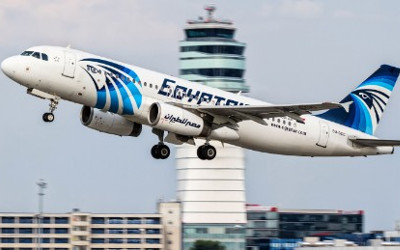 There are broadly four areas investigators will consider as they probe the disappearance of EgyptAir Flight 804 over the Mediterranean shortly before it began its descent to Cairo: Did it crash or explode due to pilot error, a technical malfunction, a smuggled bomb or an inside act of sabotage?
Vice chairman of EgyptAir told CNN's Christiane Amanpour that in case of crash "it could be mechanical failure; it could be a terrorist attack." "There are so many reasons that anything could happen up in the air," he said.
Scenario 1: Smuggled bomb. An act of terrorism is uppermost in the minds of some officials. Egyptian Aviation Minister Sherif Fathy suggested terrorism was more likely than technical failure. "If you analyze this situation properly, the possibility of having a different action aboard, of having a terror attack, is higher than having a technical problem," he said in Cairo.
Scenario 2: Insider threat. The Mogadishu incident again highlighted the "insider threat" to aviation security. In November last year, an airport employee allegedly helped smuggle a bomb on board a Russian Metrojet airliner at Sharm el-Sheikh airport in Egypt, though Egyptian authorities say no one has been arrested or charged in connection with the attack.
That bomb -- placed on an Airbus A321, exploded soon after the plane reached its cruising altitude; all 224 people on board were killed. Within hours, the ISIS affiliate in Egypt claimed responsibility. Later, the online ISIS magazine Dabiq included a photo of a soda can that it claimed was an improvised bomb placed on board the flight.
Liscouski and McGann say that many airports in the developing world lag in deploying state-of-the-art machines and rigorous training. Additionally, terrorist groups can recruit airport insiders "who either are likely to receive less scrutiny from fellow airport staff at security checkpoints than passengers or can evade screening altogether."
Scenario 3: Technical problem. Other scenarios, or a combination of pilot error and a technical problem, are equally plausible in the EgyptAir investigation. Much will hinge on how quickly wreckage is recovered, and which parts of the plane can be examined.
The part of the Mediterranean where the EgyptAir flight vanished is closer to land and much less deep than -- for example -- the mid-Atlantic, where Air France Flight 447 crashed in June 2009 while en route from Rio de Janeiro to Paris. The flight data recorder and cockpit voice recorder on that plane were eventually found at a depth of nearly 4,000 meters (more than 2 miles) -- nearly two years later.
Scenario 4: The pilots. EgyptAir says the captain of Flight 804 had 6,275 flying hours, including 2,101 on the A320; the co-pilot had 2,766. They were both experienced.
According to aviation analysts, the high level of automation aboard modern planes reduces the scope for catastrophic error among pilots. But when something does go wrong, the flight crew are bombarded with information and, in some cases, have difficulty coping with it.