
AKIPRESS.COM - 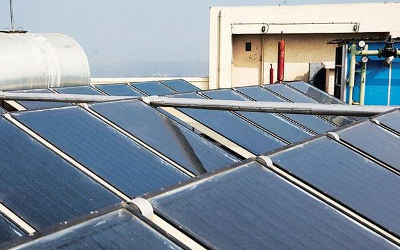 India’s capital has a new target to generate a gigawatt of solar power by 2020 and 2 GW by 2025 through rooftop installations, with the government announcing a slew of incentives, reports India Climate Dialogue.
Delhi may be the next big solar city, if the government of India’s National Capital Territory has its latest wish fulfilled. It has set a target of generating 1 GW of solar power a day through rooftop installations by 2020 and 2 GW by 2025. That’s far higher than targets set by states many times the size of Delhi.
Delhi has a peak power demand of 6.5 GW a day. Quite often, this cannot be met, and people face power cuts in temperatures that cross 40 degrees Celsius. There is enough power in the national grid, but transmission and distribution (T&D) lines are too antiquated to meet peak demand.
Decentralised power generation through rooftop solar installations would take care of T&D problems, and bring down Delhi’s huge carbon footprint.
To turn this dream into reality, the government has proposed tax breaks; 30% subsidy on capital investment; making it mandatory for government and commercial buildings to deploy rooftop solar panels; and for distribution companies to meet at least 75% of their solar renewable purchase obligation (RPO) within Delhi.
Individual households can put up their own rooftop panels. They will get an incentive depending on the amount of power they generate. Those who do not want to make the investment can get a firm to install the solar panels free of cost, and then buy the power from the firm.
New electricity meters have to be installed for the scheme to work, meters that turn one way when the utility is selling power to you, and the other way when you are generation excess power and selling it to the utility. The cost and relative scarcity of these ‘net’ meters has been a big obstacle in the rollout of solar power generation at the household level.
In its new policy, the government has tried to solve this by grouping multiple homes, factories or offices under one ‘net’ meter. This should be of greatest help to large consumers with multiple buildings and electricity connections. It may also help avoid arguments about who owns the terrace in a shared building. The efficacy of this group net metering scheme will be keenly watched.
On top of being able to sell power back to the utility, for the next three years there is an incentive of Rs 2 (3 US cents) per additional unit generated. Aruna Kumarankandath of the Renewable Energy Programme in the New Delhi-based think tank Centre for Science and Environment (CSE) says, “This is a step in the right direction. So far 18 states have drafted solar policy and Delhi has the best additional generation based incentive to boost rooftop solar.”