
AKIPRESS.COM - 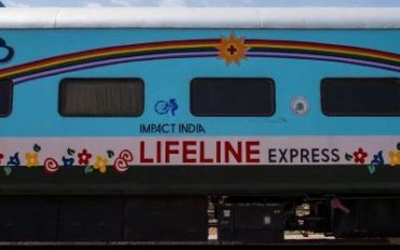 The Lifeline Express (LLE), the world’s first hospital on a train, marks 25 years of service. The LLE is about to extend the medical services it offers, to include even major surgeries, reports The Hindu.
It started with a simple idea: take the hospital to the people, especially the people of rural India, who remain poorly serviced by healthcare facilities. The Impact India Foundation (IIF), a Mumbai-based NGO, proposed the idea to the Ministry of Railways; shortly after, the Indian Railways (IR) and IIF signed an MoU under which the Railways would provide a three-coach train, provide water and electricity, and maintain it, and the NGO would operate the medical services.
Since inception, LLE has regularly conducted medical projects by camping in different parts of the country. Each camp of 21-35 days involves treatment of patients, training and awareness programmes among the rural population and local doctors. “When the train arrives for a camp, hundreds turn up with hope,” IIF chairman R.C. Sarin told a press conference on the sidelines of the silver jubilee celebrations. He spoke of the challenges ahead: “I want to extend our medical services. We need a blood bank to do major surgeries. Therefore we are restricted, but we are not restricted in attitude. LLE has caught the people’s imagination. Hundreds of villagers are clamouring for help.”
Aside from a blood bank, the train also needs post-operative care facilities; it has been limited to surgeries for cataract and clubfoot. This year, the LLE will be getting two new coaches, donated by the Railways, for additional services in cancer detection and family planning.
“The train had a modest beginning with three coaches,” said GC Agarwal, General Manager, Western Railway. “It has state-of-the-art facilities. In the beginning only some ailments were treated, but [two] new coaches were added in 2007. A lot of help came from the corporates, individuals and doctors across the country.”
Dr. Taral Nagda, a a Mumbai-based paediatric orthopaedic surgeon who has volunteered his services on the train for the last 16 years, told The Hindu , “Apart from the support staff nothing is permanent on the train. The doctors change, the equipment is upgraded; only the menu has remained the same.” Dr. Nagda recalls receiving a wedding invitation from the father of a girl he had once treated. “When she came to me as a child, she had bilateral club foot deformity. I told her father that after treatment she would be able to go to school, but he was more worried about her marriage. I operated on her and her feet were straightened. Now she goes to college, she chose her own partner and sent me a wedding invitation. The reach of this train is not just limited to treatment, it is changing lives.”
Other countries have replicated the LLE idea. China now has four such trains, and South Africa has two; Bangladesh and Cambodia each have a river boat hospital. Closer home, the Maharashtra government plans to create a separate Lifeline Express for the State.