
AKIPRESS.COM - 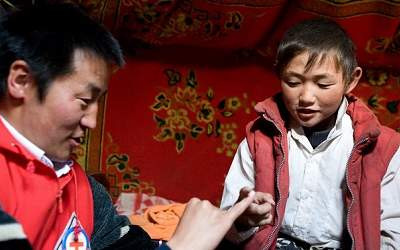 Thousands of nomadic herder families lost their only livelihood after extreme winter conditions, or dzud, struck Mongolia last year and decimated their livestock. The disaster has also caused anxiety and fear among children, as concerns about the risk of violence, poverty and migration triggered stress within the affected herder families, according to ReliefWeb.
The International Federation of Red Cross and Red Crescent Societies (IFRC) launched an emergency appeal in March to support the Mongolian Red Cross Society in providing food and other vital necessities to the affected population. As part of its recovery program, IFRC developed a memorandum of understanding with Save the Children to conduct a training on Psychosocial Support in Emergencies for 31 Mongolian Red Cross volunteers from branches across the country.
“After the training, the volunteers returned to their communities to train teachers and youth peer educators on psychosocial support,” said Oyu Baatar, the Mongolian Red Cross Social Care Program Manager. “These communities are located in isolated and hard to reach areas, where the Red Cross is sometimes the only organization able to provide consistent humanitarian services.”
5,100 children in 20 schools have been targeted with psychosocial support. Through its social care program, the Red Cross is also providing safe spaces for children living on the streets where they could have their meals, play, warm themselves during winter, and to engage with other children.
“The homeless children in the district of Bayanzurkh often come from violent or otherwise dysfunctional families,” said Chimgee, a Red Cross volunteer. “They always end up on the streets after running away from home.”
These children will be referred to the government child protection center, which houses them for one month while their needs are assessed. “It is important for the Red Cross to be available for these children, as they are one of the most vulnerable groups, particularly when they are out there on the streets,” said Chimgee. “They have no one else.”