
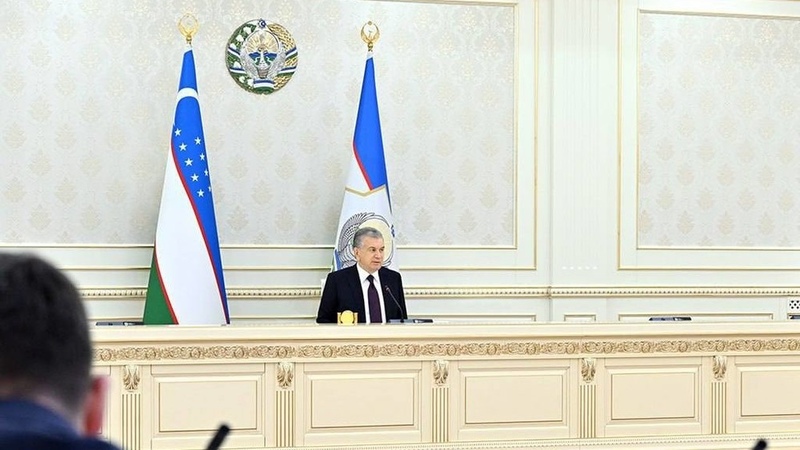
AKIPRESS.COM - President of Uzbekistan Shavkat Mirziyoyev chaired a videoconference on reducing poverty, ensuring employment of the population and supporting small businesses on January 25.
The main goal of the socio-economic policy of Uzbekistan is to increase jobs and reduce poverty, the presidential press service reported. The poverty rate fell from 17% to 14% last year as a result of work in this direction. 1 million people have been lifted out of poverty through vocational training and the promotion of entrepreneurship.
About 200,000 business entities were created in a year, the activities of 10,000 were expanded, and the production capacity of 11,000 enterprises was restored.
No significant improvement in poverty reduction indicators was observed in Navoi, Surkhandarya and Fergana regions. The developed employment programs in several districts and cities do not correspond to the available opportunities. The authorities are planning to provide employment and support small businesses this year.
"The main factor in reducing poverty is providing the population with profitable work. Therefore, 5 agencies responsible for poverty reduction were transformed into a single system as part of the administrative reform. The new ministry has been provided with all organizational and financial possibilities," Shavkat Mirziyoyev said.
The head of state noted that the scale of financial support will be expanded to further stimulate family entrepreneurship. About 10 trillion soums of soft loans were allocated in 2022. 12 trillion soums will be allocated for the family business program.
More than 200,000 hectares of land were distributed among the population in two years.
The head of state in his address to the people announced that the districts and cities will be divided into 5 categories depending on their economic potential.
It was decided at the meeting that in the districts of the 4th and 5th categories, work to reduce poverty will be organized in a new way. The "iron notebook", "youth notebook" and "women’s notebook" at the first stage will be combined into a single system, and a single digital passport will be developed for each family. Individual programs for getting out of poverty will be prepared for each family in the second stage. Vocational training and entrepreneurship projects will be implemented in the third stage.
The creation of 300 micro centers began in mahallas. The President noted the importance of increasing the number of such centers and creating conditions for the unemployed to engage in crafts and entrepreneurship.
The Ministry of Poverty Reduction and Employment was instructed, together with the Chamber of Commerce and Industry, to develop an entrepreneurship development program for each district.
Heads of regions and districts reported on the available opportunities and experience gained in the regions during the meeting.